
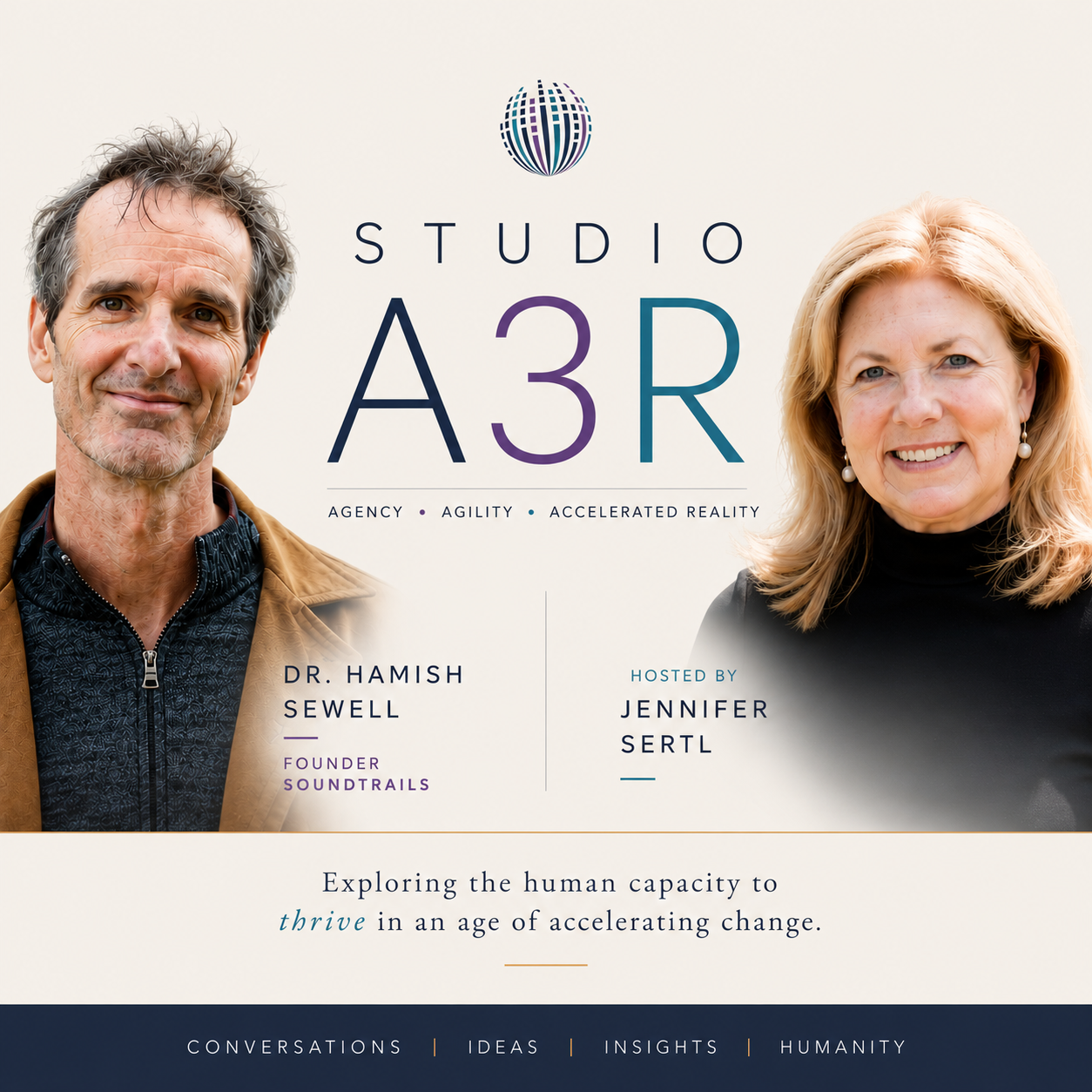
An interview with Jennifer Sertl from A3R on the vision behind Soundtrails.
In a recent podcast, Soundtrails Director, Dr Hamish Sewell was interviewed by US writer, strategist and futurists, Jennifer Sertl on the vision and thinking behind Soundtrails.
You can listen here: https://www.youtube.com/watch?v=3T2v-kYdfxo
From out of the conversation, Sertl makes the following five important points:
1. Technology is at its best when it disappears.
The conversation wasn’t really about software.
It was about what software enables.
In this case, technology becomes the infrastructure for something much larger: preserving history, strengthening communities, and creating a richer experience of place.
The platform matters.
The human experience matters more.
2. Place is an overlooked teacher.
One insight that surprised me was how much our understanding of history changes when we experience it where it happened.
Reading a historical marker is one thing.
Standing in the location while hearing the voices of people who lived there is something entirely different.
Learning becomes experiential rather than informational.
3. Stories create belonging.
As leaders, we spend a great deal of time talking about engagement and culture.
Communities face the same challenge.
People want to know where they belong.
Stories create shared identity because they connect people to each other and to something larger than themselves.
That may be one of the most important leadership lessons from our conversation.
4. The future of technology isn’t only AI.
We often assume innovation means more automation.
Hamish reminded me that innovation can also mean better listening.
Technology doesn’t always have to make us faster.
Sometimes it should help us pay closer attention.
That is a very different design philosophy.
5. Stewardship is an innovation strategy.
Throughout the interview, I kept hearing one word:
Stewardship.
Not preservation for preservation’s sake.
But stewardship as an active responsibility to future generations.
The stories we choose to preserve today become part of how future generations understand who we were.
Technology gives us new ways to fulfill that responsibility.
What do you think? We’d love to hear.