
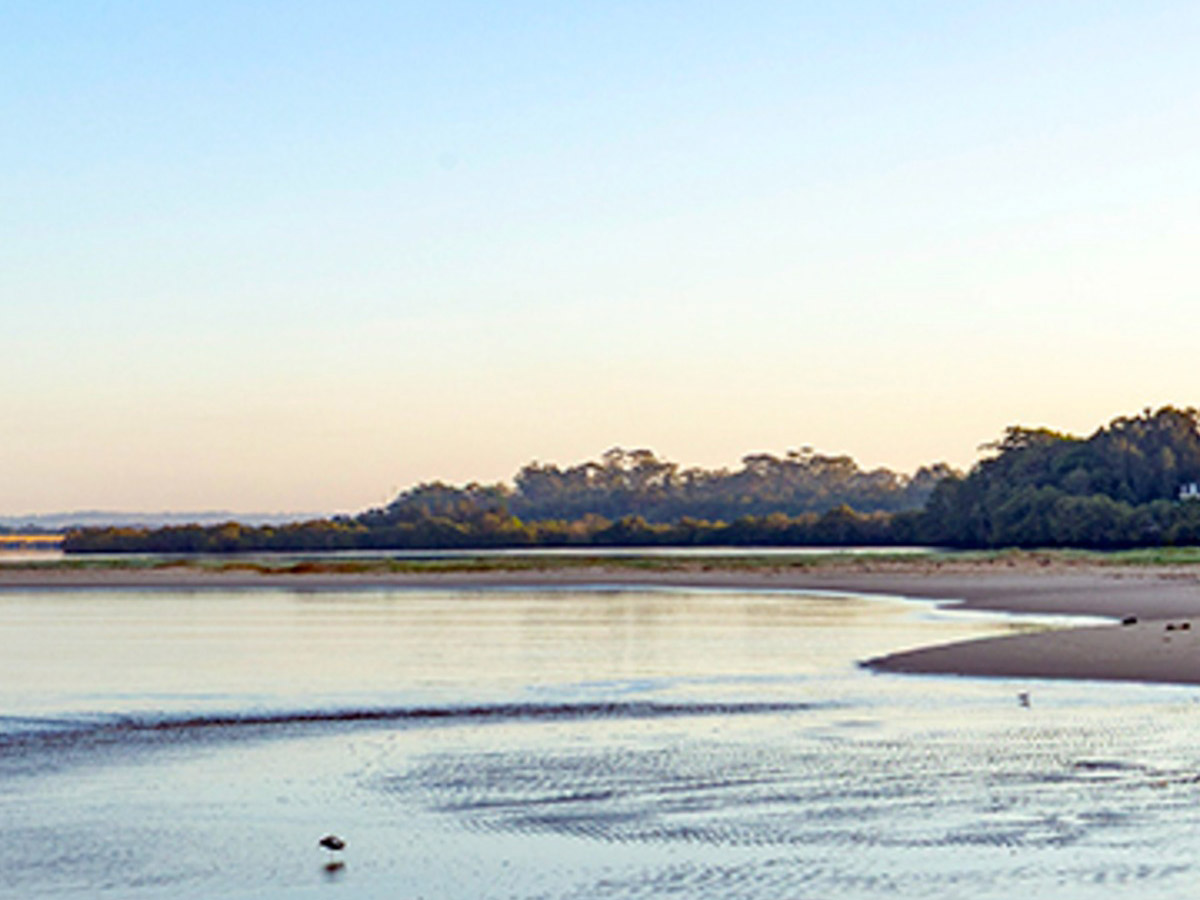
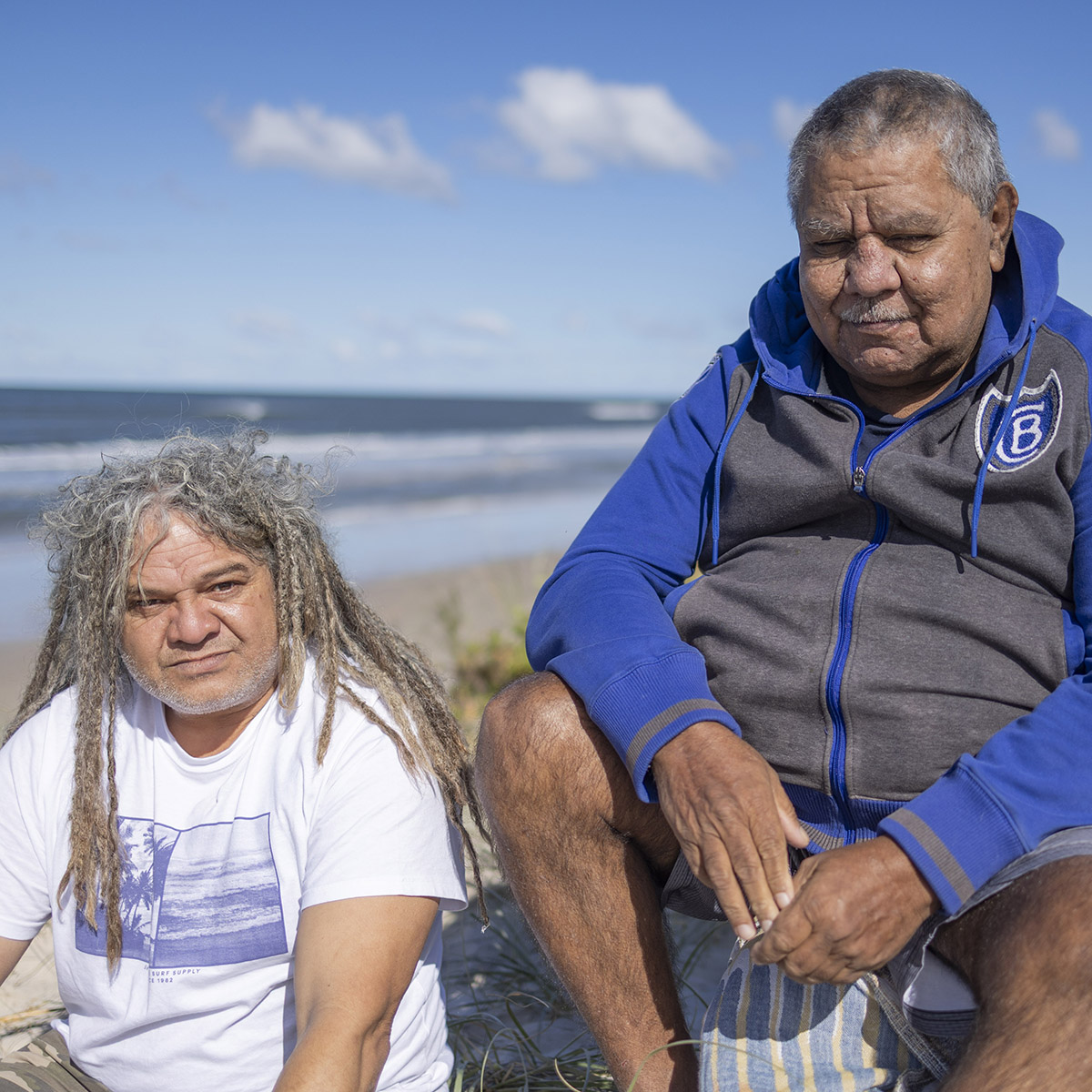
Walk with Nyangbal Elders to hear about why water (or guung) is important to the Nyangbal peoples’ way of life and culture, and how it influenced the lives of the early settlers who lived at, and upriver from, Shaws Bay. We share these stories to encourage everyone to take good care of the river today.
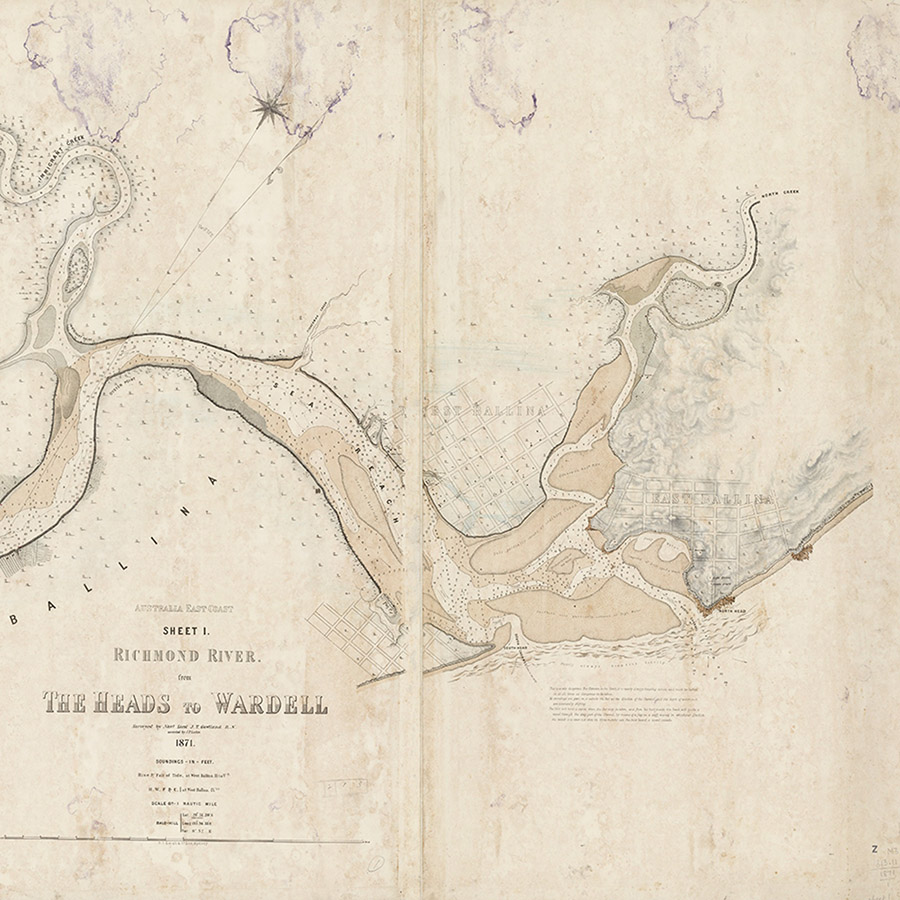
Starting at the Marine Rescue Tower and the mouth of the Richmond River, the walk follows the river to Shaws Bay and the mouth of North Creek, where it finishes at the historic Pioneer Cemetery.
Known to Nyangbal families as Maamang Balun, the river has looked after Nyangbal families for thousands of generations. From the late-1830s, European settlement brought big changes to the river, its wider landscape, and the historic way of life of Nyangbal families.
Settler families cut and sold cedar from the ‘Big Scrub,’ cleared land for farming, and established towns and villages along the river and its creeks. They often relied on the knowledge and skills of Nyangbal and other Bundjalung families to do this.
Settlement has had an unforgettable impact on Nyangbal families and their culture. It did not, however, break connection to Country, including to Ballina’s waterways.
CONTENT ADVICE: The Water Stories Walk includes the names, images, and voices of people who have passed. The Pioneer Park stories contain some historical language references that some listeners may find difficult to hear.
Credits & Contributors
We respectfully acknowledge the Nyangbal people as the First Nations custodians of the land on which the Water Walk is situated.
The Soundtrail and Water Walk is a collaboration between Ballina Shire Council and Nyangbal cultural knowledge holders, with Jali Land Council and the Water Stories Project Team.
Ballina Shire Council acknowledges the intellectual property rights of the participants whose stories and artwork are featured in the Soundtrail and along the Water Walk.
Ballina Shire Council also acknowledges the inclusion of original primary and secondary source research undertaken by the Water Stories Project Team using local and other archives and libraries. Special thanks to the Moran family for permission to use ‘Sea Eagle’ (2010) by Digby Moran, State Library of NSW, National Library of Australia, Ballina Volunteer Coast Guard, and the Richmond River Historical Society for historic images.
And to Terry Ferguson for contemporary photographs featured on the Soundtrail app.
Music and sound, listed below, are used with permission under right licensing agreements.
PROJECT TEAM
Uncle Ricky Cook – Nyangbal Cultural Knowledge and Language, Storytelling
Marcus Ferguson – Nyangbal Cultural Knowledge and Language, Storytelling
Aunty Sandra Bolt – Storytelling
Uncle Graham Marlowe – Storytelling
Dr Kate Gahan – Historian – Storytelling and co-design
Jeanti St Clair – Soundtrails Producer, interviewer, audio production, scriptwriting, performance director
Bettina Walter – Soundtrails Executive Producer
Ballina Shire Council – Project initiator, concept development, grant applicant, and lead coordinator.
CHARACTER PORTRAYAL
We thank the local actors for their performance and interpretation of historical figures in the Pioneer Park Cemetery segment of the Soundtrail.
Melinda Saxe as Margaret Easton
Dianne Ennew as Maryann Skennar
Allen Ennew as Dick Glascott
MUSIC AND SOUND
The Elders Song composed by Laura Nobel with and for the Elders of Cabbage Tree Island.
Easy Lemon, Fluidscape, Medium, Morning, by Kevin MacLeod (incompetech.com), and 6AM Bus stop by Fool Boy Media, Licensed under Creative Commons: By Attribution 4.0 License.
March Hymn, Beatoven (Non-exclusive Music License 440b4425-43f3-47ae-b16b-e16fc8383278)
USAGE NOTICE
This content has been produced with Nyangbal knowledge holders and coordinated by Ballina Shire Council.
The Indigenous Cultural and Intellectual Property (ICIP) rights or copyright of the Nyangbal cultural content reproduced in this material is held by the Indigenous contributor/s. Permission to reproduce elsewhere should be sought from the relevant custodian/s. All other rights reserved.
The reproduction of extracts of original non-Aboriginal content that appears in this interpretive material is allowable for personal, in-house, non-commercial use or professional research or report production purposes without formal permission or charge.
All other rights reserved.
If you wish to reproduce, alter, store or transmit content appearing in this interpretive material for any other purpose, a request for formal permission should be directed to Ballina Shire Council by email council@ballina.nsw.gov.au.
DISCLAIMER
The information on this website is presented in good faith and on the basis that Ballina Shire Council, nor their agents or employees, are liable (whether by reason of error, omission, negligence, lack of care or otherwise) to any person for any damage, cost or loss whatsoever which has occurred or may occur in relation to that person taking or not taking (as the case may be) action in respect of any statement, information or advice given in this website.